
The Holistic Approach to Wellness: Exploring Different Types of Wellness
- Isha

- Jul 24, 2024
- 3 min read
Wellness is a holistic integration of our physical, mental, and spiritual well-being, fueling the body, engaging the mind, and nurturing the spirit. In our fast-paced world, maintaining wellness can be challenging, but understanding its various types and how to incorporate them into daily life is a key step towards a healthier, more balanced existence. Let's explore the different dimensions of wellness along with some examples of how to achieve them.

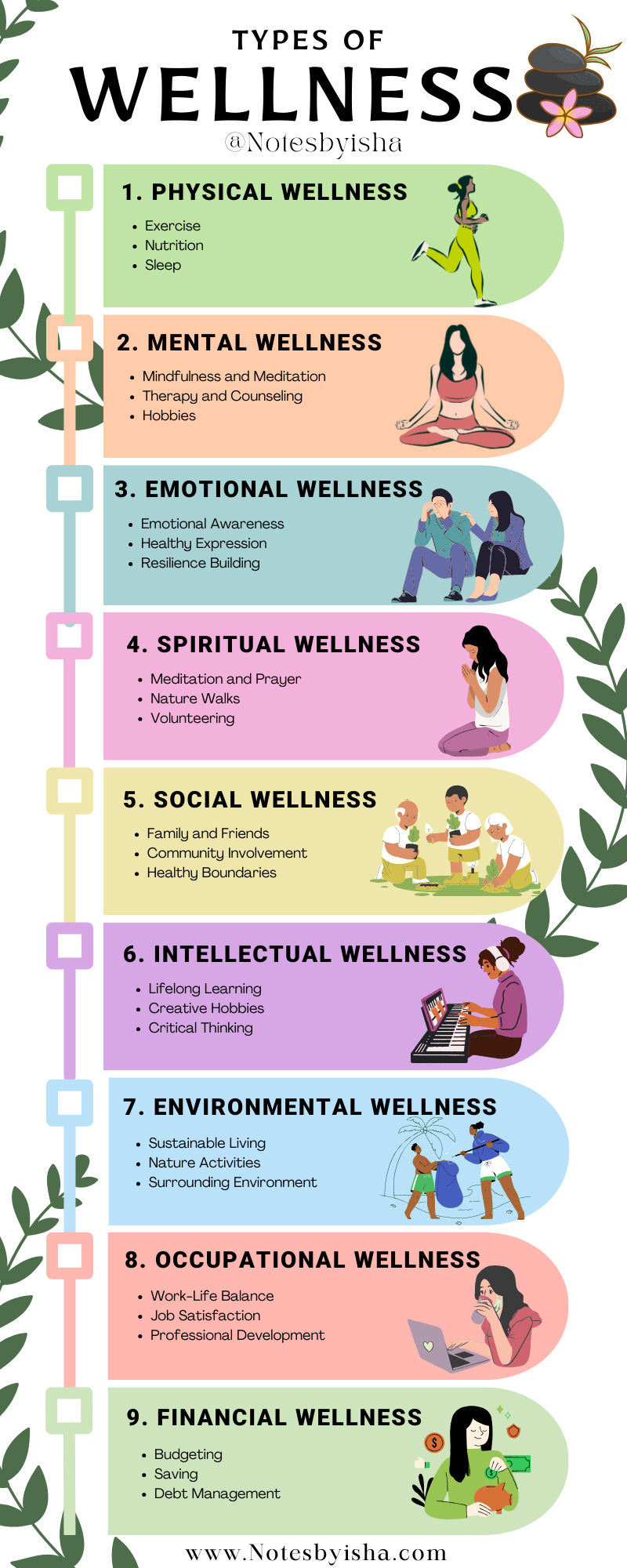
1. Physical Wellness
Definition: Physical wellness involves maintaining a healthy body through regular exercise, proper nutrition, adequate sleep, and regular medical check-ups.
Examples:
Exercise: Engaging in regular physical activities such as walking, jogging, swimming, or yoga. Aim for at least 30 minutes of moderate aerobic activity or 15 minutes of vigorous activity a day for 5 times in a week.
Nutrition: Eating a balanced diet like fruits, vegetables, lean proteins, and whole grains. Avoiding processed foods and excessive sugar.
Sleep: Ensuring 7-9 hours of quality sleep per night. Establishing a bedtime routine and creating a restful environment can improve sleep quality.
2. Mental Wellness
Definition: Mental wellness involves emotional regulation, stress management, and maintaining a positive outlook on life. It encompasses mental health and cognitive functions.
Examples:
Mindfulness and Meditation: Practicing mindfulness through meditation, deep breathing exercises, or yoga to reduce stress and enhance focus.
Therapy and Counseling: Seeking professional help for mental health issues such as anxiety, depression, or stress.
Hobbies: Engaging in activities that stimulate the mind and bring joy, such as reading, painting, or puzzles. You can read how my hobbies changed me here.
3. Emotional Wellness
Definition: Emotional wellness involves understanding and managing your emotions, as well as building resilience to cope with life's challenges.
Examples:
Emotional Awareness: Regularly checking in with yourself to understand your feelings and what triggers them.
Healthy Expression: Finding healthy ways to express emotions, such as journaling, talking to a friend, or engaging in creative activities.
Resilience Building: Developing coping strategies for stress and setbacks, such as practicing gratitude, staying positive, and seeking support when needed.
4. Spiritual Wellness
Definition: Spiritual wellness pertains to finding purpose and meaning in life, often through connection with a higher power, nature, or a set of personal values and beliefs.
Examples:
Meditation and Prayer: Taking time for meditation or prayer to connect with your inner self or a higher power.
Nature Walks: Spending time in nature to feel grounded and connected to the world around you.
Volunteering: Helping others and giving back to the community can provide a sense of purpose and fulfillment.
5. Social Wellness
Definition: Social wellness involves building healthy, nurturing, and supportive relationships and fostering a genuine connection with those around you.
Examples:
Family and Friends: Maintaining strong connections with family and friends through regular communication and spending quality time together.
Community Involvement: Participating in community activities, clubs, or groups that share your interests.
Healthy Boundaries: Setting and respecting boundaries to maintain healthy relationships.
6. Intellectual Wellness
Definition: Intellectual wellness encourages creative and stimulating mental activities, expanding knowledge, and embracing new experiences.
Examples:
Lifelong Learning: Taking courses, attending workshops, or reading books to continuously expand your knowledge.
Creative Hobbies: Engaging in activities that challenge your creativity, such as drawing, writing, or playing a musical instrument.
Critical Thinking: Practicing problem-solving and engaging in discussions that challenge your perspective.
7. Environmental Wellness
Definition: Environmental wellness involves living in harmony with the environment and taking action to protect and preserve it.
Examples:
Sustainable Living: Adopting eco-friendly practices such as recycling, reducing waste, and using sustainable products.
Nature Activities: Spending time outdoors and appreciating the natural world.
Surrounding Environment: Creating a healthy living space by reducing clutter and ensuring good air quality.
8. Occupational Wellness
Definition: Occupational wellness involves finding personal satisfaction and enrichment in one's work, balancing work and leisure, and aligning personal values with career goals.
Examples:
Work-Life Balance: Ensuring a healthy balance between work responsibilities and personal life.
Job Satisfaction: Go for pursuing a career that is fulfilling and aligns with your values and interests.
Professional Development: Continuously seeking opportunities for growth and advancement in your field.
9. Financial Wellness
Definition: Financial wellness involves managing your financial resources effectively, ensuring stability, and planning for the future.
Examples:
Budgeting: Creating and adhering to a budget to manage income and expenses effectively.
Saving: Regularly saving a portion of your income for emergencies, retirement, and future goals.
Debt Management: Developing a plan to reduce and eventually eliminate debt, avoiding high-interest loans, and using credit responsibly.
Conclusion
Embracing wellness in all its forms is essential for leading a balanced and fulfilling life. By focusing on each dimension, you can create a holistic approach to health that nurtures your body, mind, and spirit. Remember, wellness is a journey, not a destination. Take small steps each day towards a healthier, happier you.
Let's continue exploring these dimensions in depth through our blog. By sharing practical tips and personal experiences in the comment section, we can inspire our readers to embark on their own wellness journey.



Comments